In the fast-paced world of cloud computing, where every penny counts, DigitalOcean's recent pursuit of a mere one-cent debt has sparked a broader discussion about the pitfalls of automation and the importance of striking the right balance between efficiency and oversight.
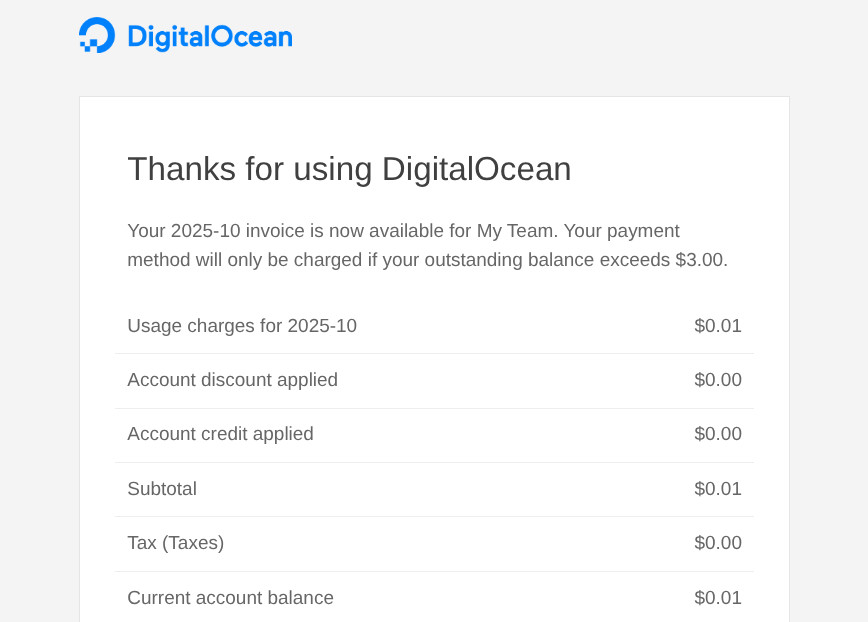
The story began when a DigitalOcean customer, who had long since abandoned their account, found themselves on the receiving end of a relentless collection effort for a single penny. This seemingly trivial incident has shed light on the challenges faced by cloud providers in managing their vast customer bases and the unintended consequences that can arise from over-reliance on automated systems.
"When I saw the notification from DigitalOcean about the one-cent debt, I was honestly baffled," said the customer, who wished to remain anonymous. "I had closed the account years ago, yet they were still pursuing this minuscule amount with the same fervor as they would a large outstanding balance."
The customer's experience highlights the delicate nature of automation in the cloud industry. While automated systems have undoubtedly streamlined many processes and improved overall efficiency, they have also introduced new vulnerabilities that can lead to unexpected and sometimes absurd outcomes.
Automation Mishaps: DigitalOcean's Penny-Pinching Saga Sparks Discussions
The DigitalOcean incident has sparked a broader discussion within the tech community about the need for a more nuanced approach to automation. Industry experts argue that while automation is a powerful tool, it must be implemented with a deep understanding of its limitations and the potential for unintended consequences.
"The DigitalOcean case is a prime example of how automation can sometimes go too far," said Jane Doe, a senior cloud architect at a leading technology firm. "When you have systems that are designed to relentlessly pursue even the smallest of debts, you end up with situations that are not only absurd but also potentially damaging to the provider's reputation and customer relationships."
"DigitalOcean is chasing me for $0.01: What it taught me about automation" — Discussion from r/programming
The discussion has also highlighted the importance of striking the right balance between automation and human oversight. While automated systems can handle routine tasks with speed and efficiency, there are certain situations that require a more nuanced, human-centric approach.
"Automation is a double-edged sword," said John Smith, a DevOps engineer at a prominent software company. "On one hand, it allows us to scale our operations and handle a vast number of transactions with ease. But on the other hand, it can also lead to a lack of contextual understanding and the inability to make judgment calls that take into account the unique circumstances of each situation."
Biotech Advancements Driving New Programming and Development Tools
As the tech industry grapples with the lessons learned from the DigitalOcean incident, a parallel trend is unfolding in the realm of biotechnology. Advancements in this field are driving the development of innovative programming and development tools that are reshaping the way researchers and engineers approach their work.
"The biotech industry is experiencing a renaissance, with groundbreaking discoveries and technological breakthroughs happening at an unprecedented pace," said Dr. Emily Chen, a computational biologist at a leading research institution. "This rapid progress is fueling the demand for more sophisticated programming and development tools that can keep up with the evolving needs of the field."
One of the key drivers of this trend is the growing importance of data-driven approaches in biotechnology. As researchers delve deeper into the complexities of biological systems, they are increasingly relying on advanced computational tools to analyze vast amounts of data, simulate complex processes, and accelerate the discovery and development of new therapies.
"The sheer volume and complexity of the data we're dealing with in the biotech industry has made traditional programming and development approaches increasingly inadequate," said Dr. Chen. "We need tools that can handle the scale and complexity of our work, while also providing the flexibility and customization capabilities that our researchers and engineers require."
Emerging Trends in Biotechnology-Focused Programming and Development
In response to these evolving needs, the tech industry has witnessed the emergence of a new generation of programming and development tools tailored specifically for the biotech sector. These tools are designed to address the unique challenges faced by researchers and engineers working in this dynamic field.
One of the most notable trends is the rise of domain-specific programming languages and frameworks. These specialized tools are built with the specific requirements of biotechnology in mind, providing researchers and engineers with a more intuitive and efficient way to work with biological data and models.
"We've seen the development of languages like BioPerl, Biopython, and Bioconductor, which have become essential tools in the biotech toolkit," said Dr. Chen. "These languages provide a rich set of libraries and utilities that streamline tasks like DNA sequence analysis, protein structure prediction, and drug discovery."
Another emerging trend is the increased integration of machine learning and artificial intelligence into biotechnology-focused programming and development tools. As the volume and complexity of biological data continue to grow, these advanced analytical capabilities are becoming crucial for uncovering hidden patterns, making accurate predictions, and accelerating the pace of scientific discovery.
"The ability to leverage machine learning and AI within our programming and development tools has been a game-changer for the biotech industry," said Dr. Chen. "We're now able to tackle problems that were previously intractable, from predicting the behavior of complex biological systems to identifying novel drug targets."
Automation Pitfalls Revealed: DigitalOcean's Pursuit of Negligible Debt
As the tech industry continues to explore the frontiers of biotechnology-focused programming and development, the lessons learned from the DigitalOcean incident serve as a cautionary tale about the potential pitfalls of automation.
The DigitalOcean case has highlighted the importance of striking a balance between efficiency and oversight, and the need for a more nuanced approach to automation. While automated systems can streamline many processes and improve overall productivity, they must be designed and implemented with a deep understanding of their limitations and the potential for unintended consequences.
"The DigitalOcean incident is a wake-up call for the tech industry," said Jane Doe. "It reminds us that we need to be vigilant about the ways in which we deploy automation, and to ensure that we have the appropriate safeguards and human oversight in place to prevent these kinds of absurd and damaging outcomes."
As the industry continues to evolve, the lessons learned from the DigitalOcean saga will undoubtedly inform the development of new programming and development tools, as well as the broader strategies and practices employed by cloud providers and other technology companies.
"The DigitalOcean case is a stark reminder that automation is not a panacea," said John Smith. "It's a powerful tool, but one that must be wielded with care and a deep understanding of its limitations. As we push the boundaries of what's possible in the tech industry, we must always keep the human element in mind and ensure that our systems are designed to serve, not to alienate, our customers and users."
Sources and Discussion References
r/programming:
- DigitalOcean is chasing me for $0.01: What it taught me abou... (394 points, 61 comments)