The open-source world is abuzz with the remarkable milestone achieved by a trending Python project on GitHub. DeepSeek-V3, a powerful deep learning-based search engine, has just surpassed the impressive milestone of 100,000 stars on the platform. This feat underscores the growing prominence of advanced AI and machine learning technologies in the realm of information retrieval and knowledge discovery.
DeepSeek-V3 was initially launched as an experimental project by a team of researchers and engineers passionate about pushing the boundaries of search engine capabilities. Leveraging the latest advancements in deep neural networks and natural language processing, the tool aims to provide users with more intuitive, context-aware, and semantically rich search results. Unlike traditional keyword-based search engines, DeepSeek-V3 employs sophisticated language models to understand the intent behind queries and deliver more relevant and personalized information.
The project's meteoric rise to 100,000 stars on GitHub is a testament to its widespread adoption and the community's enthusiasm for its innovative approach. Developers, data scientists, and tech enthusiasts from around the world have contributed to the project's growth, providing valuable feedback, bug reports, and feature enhancements. The project's open-source nature has also allowed for seamless collaboration and the integration of cutting-edge research findings, further solidifying its position as a leading-edge search solution.
As the project continues to evolve, the team behind DeepSeek-V3 is exploring ways to expand its capabilities beyond traditional search, venturing into areas such as personalized recommendation systems, knowledge graph-powered question answering, and even integrating with emerging technologies like virtual assistants and augmented reality applications. The potential for DeepSeek-V3 to revolutionize the way we access and interact with information is truly exciting.
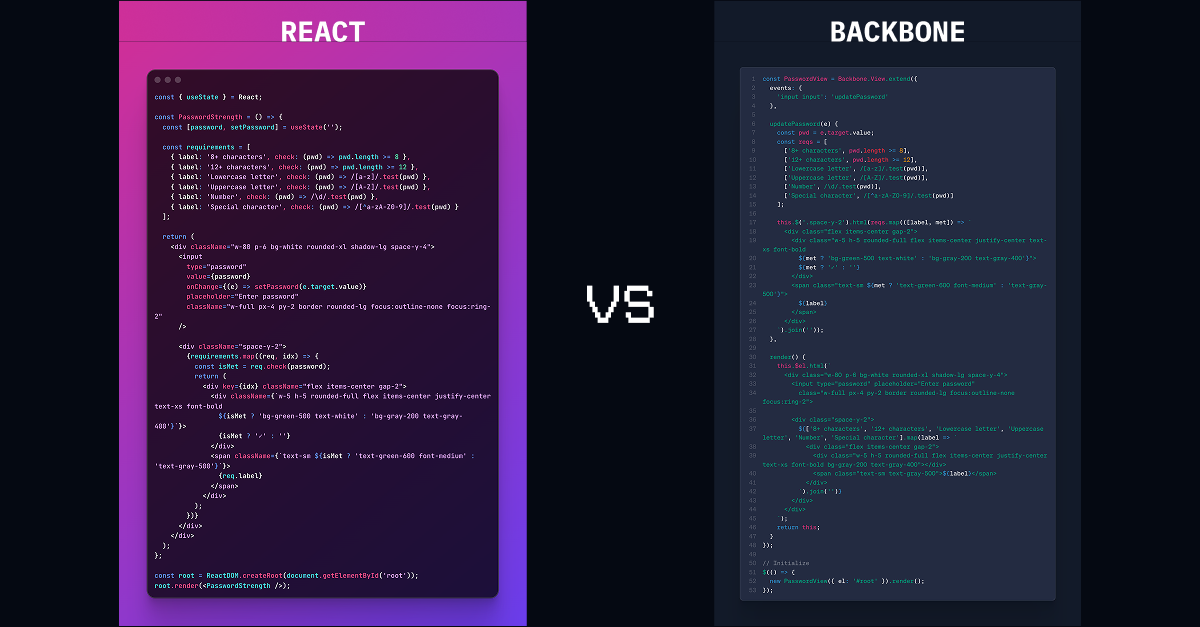
Comparing React and Backbone Frameworks for Future Web Development
"None Language: Python Stars: 99950 Forks: 16306" — Discussion from GitHub Trending
In the ever-evolving landscape of web development, the choice of the right JavaScript framework can have a significant impact on the success and longevity of a project. Two prominent frameworks, React and Backbone, have long been vying for the attention of developers, each offering its own unique strengths and capabilities. As we look towards the future of web development, it's essential to understand the nuances and potential trajectories of these two frameworks.
React, the brainchild of Facebook's engineering team, has rapidly gained popularity in recent years, thanks to its efficient virtual DOM (Document Object Model) and component-based architecture. React's ability to efficiently update and render only the necessary parts of the user interface has made it a go-to choice for building complex, dynamic web applications. With a thriving ecosystem of libraries and tools, React has become a versatile and scalable solution for a wide range of web development projects.
On the other hand, Backbone, a more established framework, has long been praised for its simplicity and flexibility. Backbone's modular approach, which separates the concerns of models, views, and collections, has resonated with developers who value a more structured and opinionated approach to web development. While Backbone may not have the same level of community support and tooling as React, it has proven to be a reliable and maintainable choice for building web applications, particularly in scenarios where a more lightweight and customizable solution is preferred.
As we look towards the future, the decision between React and Backbone will largely depend on the specific needs and requirements of a project. React's dominance in the front-end ecosystem and its strong support from the tech giants like Facebook and Instagram suggest that it will continue to be a leading choice for building large-scale, complex web applications. However, Backbone's enduring appeal and its suitability for more focused, modular projects indicate that it will continue to have a place in the web development landscape.
Ultimately, the choice between React and Backbone will come down to factors such as team expertise, project complexity, performance requirements, and the long-term maintenance and scalability needs of the application. Savvy web developers will need to carefully evaluate the trade-offs and weigh the pros and cons of each framework to determine the best fit for their specific project requirements.
Agentic Postgres: A Novel AI-Powered Database for Modern Applications
In the rapidly evolving world of data management, a new and innovative database solution has emerged, capturing the attention of developers and data professionals alike. Introducing Agentic Postgres, a groundbreaking AI-powered database that promises to revolutionize the way we interact with and manage our data.
Agentic Postgres, the brainchild of a team of visionary engineers and data scientists, is the first of its kind - a database built from the ground up with artificial intelligence at its core. Unlike traditional database management systems, Agentic Postgres employs a unique "agent-based" architecture, where intelligent software agents work collaboratively to optimize data storage, retrieval, and processing.
At the heart of Agentic Postgres lies a powerful AI engine that continuously analyzes the patterns and behaviors of the data it manages. These agents, imbued with machine learning capabilities, are able to autonomously adapt and optimize the database's performance, indexing, and query optimization strategies based on the specific needs and usage patterns of the application.
One of the standout features of Agentic Postgres is its ability to learn and evolve over time. As the database is used, the agents gather valuable insights and continuously refine their strategies, ensuring that the system becomes more efficient and responsive with each passing day. This self-learning capability not only reduces the manual overhead typically associated with database administration but also enables the database to adapt to the changing needs of modern, data-driven applications.
But Agentic Postgres is more than just a smart database - it's also designed to be highly scalable and resilient. The agent-based architecture allows for seamless horizontal scaling, enabling the database to handle increasing amounts of data and user traffic without compromising performance. Additionally, the system's built-in redundancy and fault-tolerance mechanisms ensure that critical data remains safe and available, even in the face of hardware failures or network disruptions.
"React vs. Backbone in 2025" — Discussion from Hacker News
Perhaps most impressively, Agentic Postgres is being offered as a free and open-source solution, making it accessible to developers and organizations of all sizes. By democratizing access to this cutting-edge technology, the project's creators aim to empower a new generation of data-driven applications and accelerate the pace of innovation in the software industry.
As the world continues to generate vast amounts of data, the need for intelligent, scalable, and efficient database solutions has never been more pressing. Agentic Postgres, with its AI-powered capabilities and open-source approach, stands poised to become a game-changer in the database landscape, ushering in a new era of data management and powering the next wave of modern applications.
Data Science Courses Gain Popularity Amid Cloud Computing Trends
In the rapidly evolving technology landscape, one trend that has been gaining significant momentum is the surge in popularity of data science courses. As cloud computing continues to transform the way businesses and individuals store, process, and analyze data, the demand for skilled data scientists has skyrocketed, leading to a proliferation of educational programs and online resources catering to this growing field.
The rise of cloud computing has been a driving force behind the increased interest in data science. Cloud-based platforms, such as Amazon Web Services (AWS), Microsoft Azure, and Google Cloud, have made it easier than ever for organizations to store, manage, and process large volumes of data. With the scalability and flexibility offered by cloud infrastructure, businesses can now leverage advanced analytics and machine learning techniques to extract valuable insights from their data, informing critical decision-making processes.
In response to this trend, educational institutions and online learning platforms have scrambled to develop comprehensive data science curricula, catering to both aspiring professionals and those looking to upskill in their current roles. From introductory courses on data analysis and visualization to advanced programs in machine learning and artificial intelligence, the range of data science offerings has expanded exponentially.
One of the key factors contributing to the popularity of data science courses is the versatility of the skills acquired. Data scientists are in high demand across a wide range of industries, from finance and healthcare to e-commerce and transportation. As organizations increasingly recognize the value of data-driven decision-making, the need for professionals who can effectively collect, analyze, and interpret data has become paramount.
Moreover, the flexibility and accessibility of online learning platforms have made data science education more inclusive and convenient than ever before. Individuals from diverse backgrounds, geographic locations, and educational levels can now access high-quality data science courses, allowing them to develop the necessary skills to thrive in this dynamic field.
As the cloud computing landscape continues to evolve, the demand for skilled data scientists is only expected to grow. Educational institutions and online learning providers must remain agile and responsive to these market trends, continuously updating their curricula and delivery methods to ensure that aspiring data professionals are equipped with the knowledge and tools they need to succeed in the data-driven economy of the future.
Analyzing the Rise of Data Science and its Impact on Technology
The rapid advancements in data science have undoubtedly transformed the
Sources and Discussion References
GitHub Trending:
- 🔥 Trending: DeepSeek-V3... (99950 points, 72 comments)
Hacker News:
- React vs. Backbone in 2025... (158 points, 114 comments)
Dev.to:
- 🚀 Introducing Agentic Postgres: The First & Free Database Bu... (141 points, 6 comments)